
Undergraduate Research Opportunities

InnovateCS Research Grant
The InnovateCS Research Grant supports undergraduate students at the University of Rochester who want to get started with summer research. The program offers structured, hands-on research experiences that help students begin their academic and professional paths in computer science. Students will work as part of ongoing research projects in the CS department.
Submit Faculty Mentor Recommendation Letter
Fast Facts
- Application Deadline: February 14, 2026, at 11:59pm
- Decisions Announced: March 2, 2026
- Offer Accept/Reject Deadline: April 6, 2026
- Eligibility:
- URochester undergraduate computer science intended and declared majors - except for graduating seniors - working under the mentorship of a URochester faculty member - OR -
- URochester undergraduates in the Hajim School and the School of Arts & Sciences - except for graduating seniors - working under the mentorship of a URochester faculty member in the computer science department
- Program Duration: May 18 - July 31, 2026
- Time Requirement: Minimum of 300 hours of in-person, research-intensive involvement
- Funding: $5,000 stipend per student (paid bi-weekly)
- Number of InnovateCS grants available: Up to 10
Application
Students should find a faculty mentor before working on their application.
Required Materials
Student Resume/C.V.
Include all Computer Science and Math courses taken, along with their corresponding grades
Research Proposal
The research proposal should be 1.5 - 2 pages single spaced, 11- or 12- point font size. Any figures/graphics/charts/references included in the research proposal do not count towards the two pages.
Please keep in mind that your application will be read by a faculty member who may not be a specialist in your particular subfield. Your description must include the following:
- Context and Background: Situate this project within its field.
- Methodology: Provide a description of how the research question/problem is to be investigated.
- Objectives: Objectives are specific, measurable or identifiable tasks you will do to address the problem identified. What are the specific tasks and expected outcomes of the research? (Bulleting or numbering the objectives can be a useful way to stay on track and clearly present the aims of the project.)
- Contribution: Describe your individual role/contributions to the project.
- Anticipated results: (This section will vary based on the type of project.) The committee does not expect you to know exactly what will happen but wants to see that you've thought about what might happen.
- Project timeline: Use text or a table to explain the general timing of the steps outlined in your plans. Remember that you are expected to complete at least 300 hours of work over the course of the summer between May 18 - July 31, 2026. Be realistic. Reviewers will be looking to see if your project is feasible.
Personal Statement
The personal statement should be a maximum of 1 full page, single spaced, 11- or 12- point font size.
Describe how this experience will support your educational and professional goals. Please share your unique narrative about why this research experience is meaningful to you. Optional: please describe any relative special needs, circumstances, or hardships that we should consider.
- Broadly speaking, why are you interested in research?
- What led you to wanting to engage with this specific research experience?
- How does this research experience relate to your personal, academic, and professional goals?
- How and why do you think this experience will meet your expectations?
- Are there any mitigating factors, barriers, or other things that you would like us to consider?
Faculty Mentor Recommendation Letter
Please note that this is a confidential letter, and students will not be able to see their mentor's letter.
The faculty mentor should cover (but is not limited to) the following in their letter:
- A supervision/communication plan that includes regular meetings and explains how the student will be evaluated over the course of the experience.
- Verify the originality of the work.
- Provide strong evidence that the student has the qualifications to carry out the project successfully within the time period.
- How will this experience benefit the student?
- Why did you agree to mentor this student?
- how do you know this student? In what capacity? For how long?
- Comment on the student's character. What attributes will the student bring to the role of researcher?
- Are there any mitigating factors concerning the student that you would like us to consider?
Submit Faculty Mentor Recommendation Letter
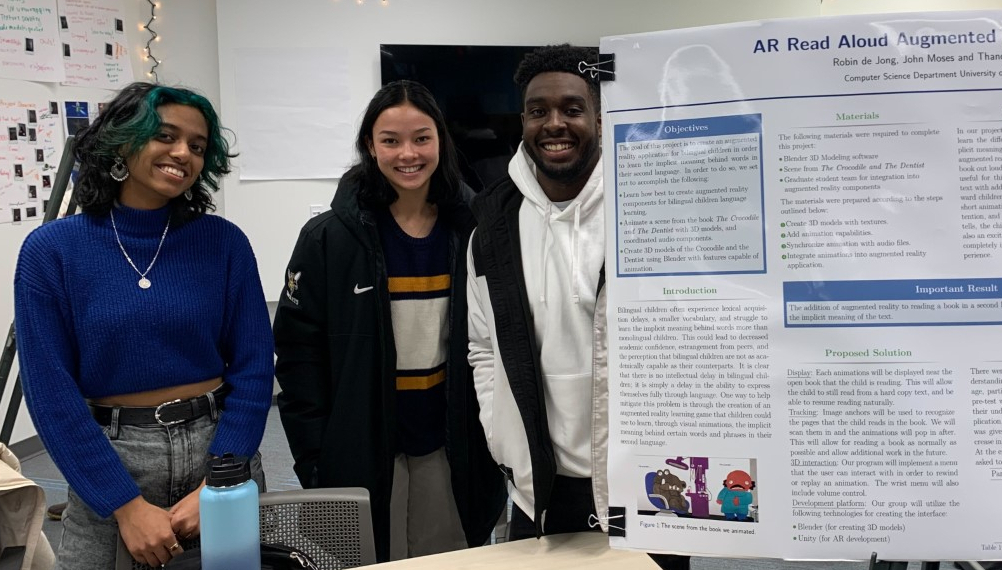
How do I get started in Computer Science research?
Research is about pushing the boundaries of what we know, asking new questions, finding the answers, and adding to our knowledge about the world. Problem solving with students is the cornerstone of research. In order to push the boundaries of what we know, you have to know where those boundaries are. This requires preparation, including taking foundational courses in the discipline. For most Computer Science students, this means at least some of the Computer Science core courses.
Research also almost always involves a personal relationship with a supervisor or so again, you need to take courses and get to know the professors and what they do in their research. Then you can make an appointment to meet with them and discuss possibilities. The collaborative dynamic required by research between faculty and students is unlike that found in the classroom. Reach out to a faculty member and see for yourself, you might be surprised!
Another step in the right direction is to check out the “Getting Started” resources provided by The Office of Undergraduate Research.
Below are some other ways to become involved in CS research. They include:
- Take CSC200 or 200H: This course is an intensive structured introduction to the problem-solving skills needed to do research.
- Attend research group meetings: Many Computer Science research groups have regular meetings that are open to undergrads. That's another way to learn about research topics, meet people, and make a connection. Check the CS Undergrade Research webpage to see when groups meet.
- Help out however you can: Some research projects have opportunities to do less technical work as a way of getting involved. For example, you might run subjects through experiments designed by more experienced researchers. Make the connection first, then ask about the opportunities.
- Find an NSF REU: The National Science Foundation funds programs called “Research Experiences for Undergraduates” for U.S. citizens and permanent residents. An REU Site consists of a group of undergraduates who work in the research pro- grams of the host institution. Each student is associated with a specific research project, where he/she works closely with the faculty and other researchers. Visit the NSF website to look for REU opportunities at Rochester and elsewhere
- Explore CRA's Research resources
What | When & Where | Who |
Main Department Seminar | Mondays 12:00pm Wegmans Hall 1400 |
|
Natural Language Processing | Fridays 3:00pm Wegmans 3201 | Prof. Gildea gildea@cs.rochester.edu |
RIT-UR Theory Canal | Noon, most second and fourth Wednesdays | Prof. Hemaspaandra lane.hemaspaandra “at” icloud.com |
| Weekly Group Meeting Tuesdays 9:00am Wegmans 2506
Weekly Paper Reading Session Thursdays 9:00am Wegmans 3201 | Prof. Hoque |
Weekly Group Meeting Tuesdays 1:00-2:30pm Wegmans 3201 Weekly Paper Reading Session Thursdays 3:30-4:30pm Wegmans 3201 | Prof. Bai | |
Weekly Group Meeting Day/Time yet to be determined | Prof. Yan yyan37@cs.rochester.edu | |
Systems Group | Fridays 2:00pm Wegmans 2506 | Profs. Criswell, Ding, Dwarkadas, Guo, Nargesian, Pai, Scott, Zhu; {criswell, cding, sandhya, yguo51, fnargesi, sree, scott, yzhu} @cs.rochester.edu |
Vision & Learning | Fridays 10:00am Wegmans 3211 | Prof. Xu chenliang.xu@rochester.edu |
High Performance Computing | Contact Prof. Pai for meeting details | Prof. Pai sree@cs.rochester.edu |
VIStA (Visual Intelligence and Social Multimedia Analytics) | Fridays 10:30 – 11:30am
| Prof. Luo jluo@cs.rochester.edu |
Rochester Security Group | Contact Prof. Criswell for meeting details | Prof. Criswell |
kLab (Artificial Intelligence) | Fridays via Zoom, Contact Prof. Kanan for details | Prof. Kanan ckanan@cs.rochester.edu |
Data Intelligence Group | Contact Prof. Nargesian for meeting details | Prof. Nargesian fnargesian@rochester.edu |
Students should also see the Office of Undergraduate Research for more information.
Last Updated 2 December 2025